The practitioner's problem
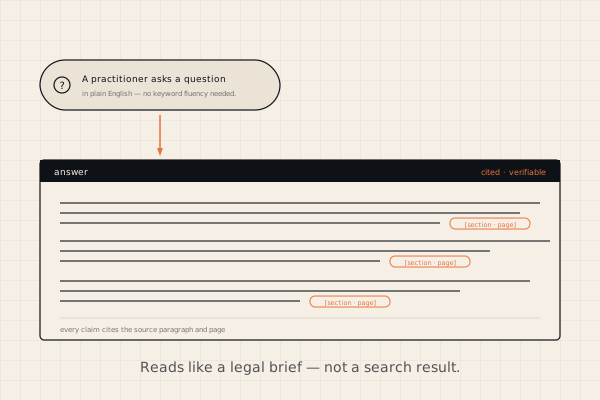
Ask any working CA how they research a tax question and the answer is a workflow held together with bookmarks, memory, and patience. The CBIC website's keyword search returns document titles, not the relevant section. PDFs get opened in a dozen tabs. The right clause for a scenario phrased as "our client received an adverse advance ruling, what's the appeal window" lives on page 147 of an act, three sub-clauses deep, and finding it is the work.
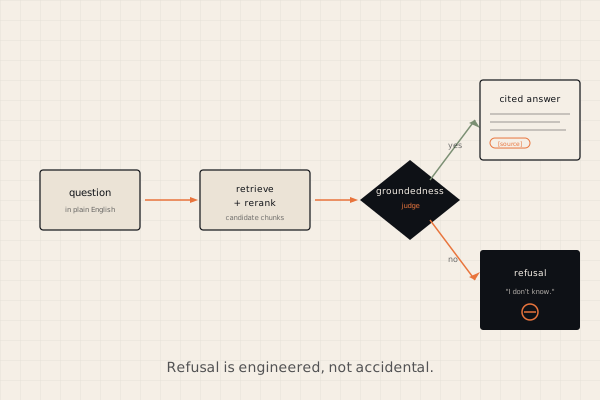
The new generation of AI assistants doesn't fix this. Most of them wrap a frontier model with a "you are a tax assistant" preamble and answer fluently — sometimes citing real provisions, sometimes inventing section numbers that don't exist. A practitioner can't issue billable advice on output like that. Verifying every cited section yourself takes longer than the original lookup.
There's a quieter problem underneath: the questions practitioners ask are usually about specific clients. A tool that pipes those queries to a US model vendor isn't usable for compliance-sensitive work. The data sovereignty question isn't theoretical — it's the reason most firms have not adopted any AI tool yet.