Auto Easy.
A per-shop auto-services booking app — one codebase, four roles (shop owner, car-owning client, mechanic, in-shop kiosk), and a QR code that binds each customer to the shop they scanned it at. In active build, in pilot with a real auto-body shop, launching imminently.
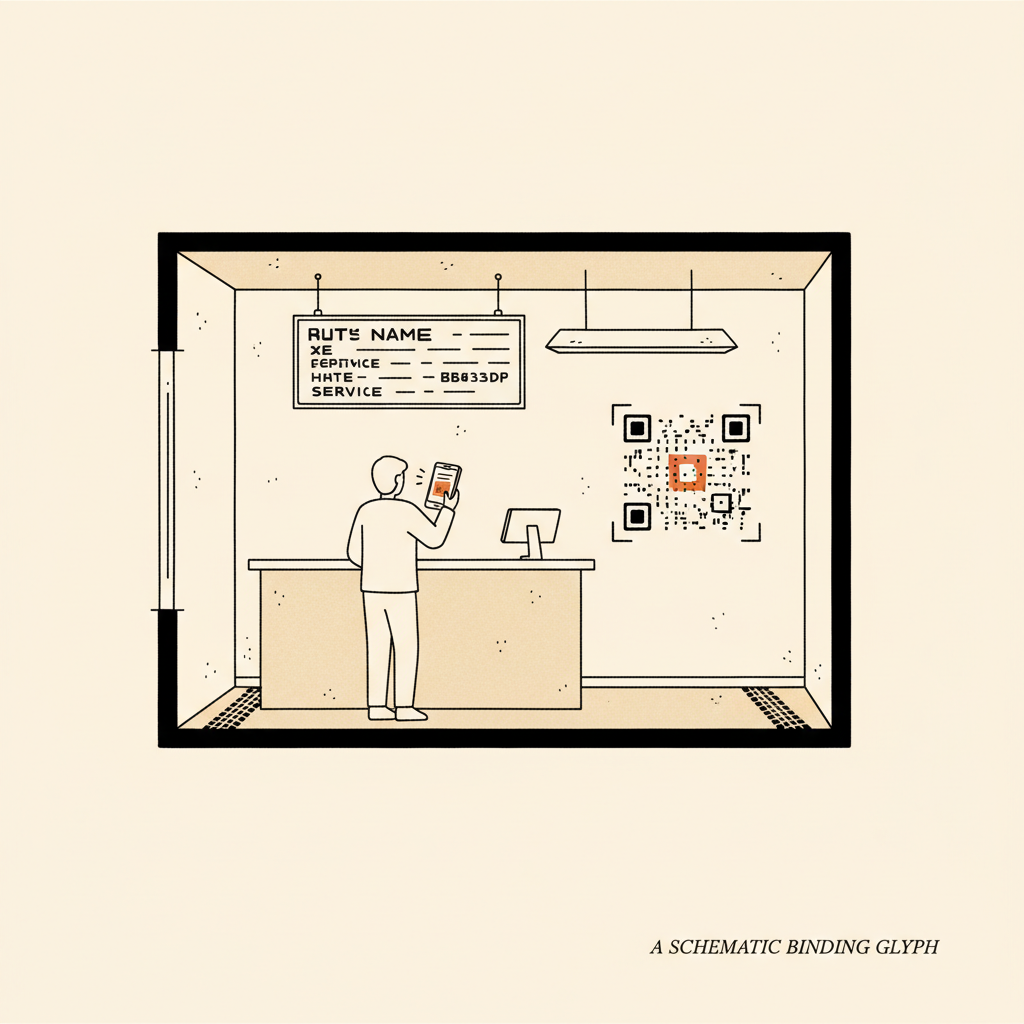
Shops lose the customer relationship the moment a marketplace touches it.
An auto-body shop owner runs the business on phone calls, paper schedules, a separate point-of-sale, and a WhatsApp thread per regular customer. The booking is in a notebook, the vehicle history is in the owner's head, the payment is on a card terminal that doesn't talk to anything, and the receipt — if there was one — is somewhere in a drawer.
The available software for this market splits into two camps that each solve half the problem. There are shop-management tools built for the back office that have no client-facing app at all, so customers still phone the shop. And there are consumer booking aggregators where customers shop around between businesses, and the shop is one tile in a grid alongside everyone else. The shop ends up either invisible to its own customers, or commoditised inside someone else's marketplace.
The pain is structural. Every time a shop sends a customer through a third-party booking flow, it hands the relationship over. The marketplace owns the inbox, the reminders, the reviews, the next-time nudge. The shop did the work; somebody else captured the loyalty.
One app per shop. Four roles. One codebase.
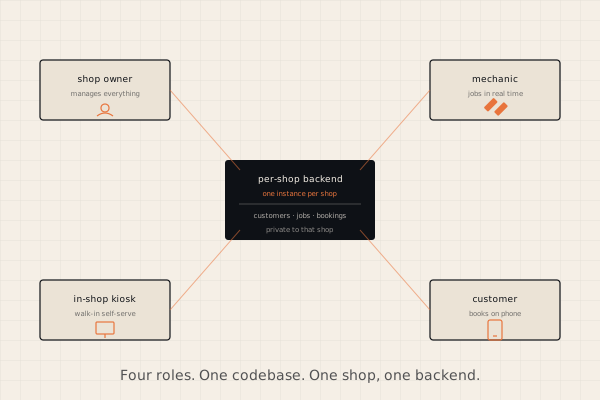
Auto Easy is a mobile-first booking app that ships as a per-shop instance. Each auto-body shop gets their own app, their own customer base, their own brand on the front of the experience. It's not a marketplace and there's no shared directory of shops. The shop owner is the studio's customer; their drivers are theirs.
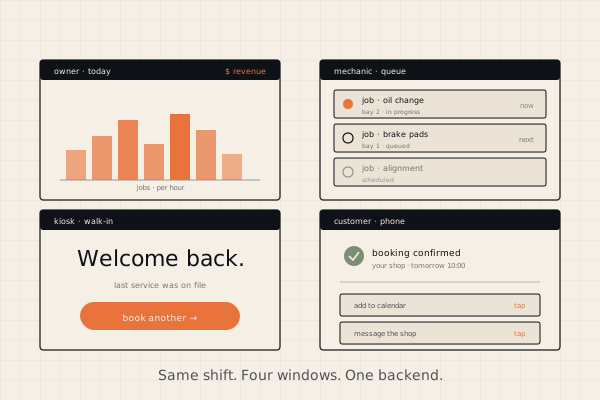
The same codebase serves four different surfaces, gated by role at sign-in: a shop-owner dashboard for running the business, a client experience for the car-owning customer, a mechanic dashboard for the floor, and a full-screen kiosk mode for the front desk tablet. Each role gets a UI shaped for its workflow, and each role has its own AI assistant tuned to what that user actually needs to do.
Underneath, it's an Expo / React Native app with a Supabase backend, Stripe Connect for payouts straight to the shop, and push notifications that keep mechanics and customers in the loop without anyone having to phone anyone. Mobile-first because the shop floor and the customer's pocket are both phones, not desktops.
Each role gets a UI shaped for what that person actually does.
Auto Easy ships four logically separate apps from one shared codebase. A user's role is set at sign-in and the UI re-routes accordingly — a customer can never accidentally land on the owner dashboard, a mechanic can't see the customer's payment screen.
Runs the business end-to-end
Dashboard with today's appointments, revenue, and bay utilisation. A customer database with vehicle history per customer. A mechanic roster with schedules and per-mechanic analytics. Service packages, promotions, reviews. Stripe Connect for direct payouts. An AI assistant tuned for ops and analytics questions.
Books and tracks the work
A book-a-service flow, an appointments calendar, a vehicle list with maintenance and recall alerts, in-app chat with the shop, and in-app payment. An AI assistant answers questions like "is my car due for service?" and "what does this dashboard light mean?" The customer sees one shop — the one whose QR they scanned — not a directory.
Works the floor
A per-mechanic dashboard with today's jobs, in-progress and completed counters, and a schedule view. Notifications when the owner assigns or reschedules a job. An AI assistant tuned for diagnostic and procedural questions — the kind a mechanic would otherwise ask the most experienced person in the shop.
The front-desk tablet
A tablet at the shop's front desk that any walk-in customer can interact with directly. Voice-first AI conversation, self-service check-in, tap-through booking, full-screen dark theme. Same codebase as the rest, dedicated surface for the in-person moment.
The QR code is not a feature. It's the structure.
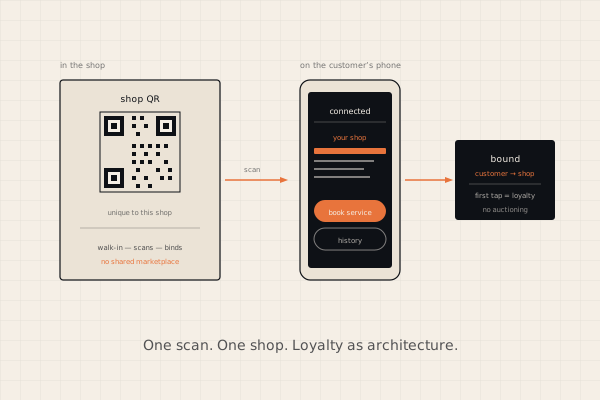
Each shop has a unique QR code. A customer scans it once — at the front desk, on a sticker by the bay, on a card handed over at the end of a job — and registration plus association happen in a single tap. The customer is now bound to that shop. They don't see a directory of other shops. They don't get cross-sold to a competitor down the road. The app, by construction, doesn't show them anywhere else to go.
One QR. One shop. One customer relationship.
The shop captures the customer relationship — the inbox, the service history, the reminders, the reviews, the next-time nudge — because the architecture binds the customer to one shop at the moment of registration. The shop owner does the work; the shop owner keeps the customer.
This is the most opinionated choice in the product. It's a deliberate trade-off: the customer gets one shop's experience, not a marketplace; the shop gets a customer base it actually owns. For the operators we built this for — small-to-mid auto-body shops who already have repeat customers and don't want to be commoditised — that trade is the right one.
Said another way: a feature can be removed in the next sprint. A structure has to be ripped out. Auto Easy makes loyalty structural, so it stays loyal even when nobody's working on a "loyalty feature."
In pilot. With a real auto-body shop.
Auto Easy is in active development and currently running with one real auto-body shop as its pilot partner. The shop owner is helping us make the product work against real customer flows — real bookings, real walk-ins, real mechanics, real revenue. The pilot is the validation step before we open the product up to other shops.
We'll be honest about the maturity: the codebase is real, the four roles are wired, the pilot is live. The product is in the phase where the next ten percent of work is what makes the difference between "demoable" and "trustable on a Tuesday morning when the shop is busy and a customer walks in." That's the work happening now.
/ Pilot partner anonymised by design. The shop and its owner are not named in any public artifact. If they choose to be named later, that's their call.
Per-shop subscription, with custom consulting when a shop needs more.
Auto Easy is sold as a SaaS subscription, per-shop, with tiered plans. Each shop gets its own instance, its own customer base, its own branded experience. Tier specifics are being finalised against pilot data — we'd rather price honestly off real shop usage than guess.
For shops with bespoke needs — an unusual workflow, an integration with a specific point-of-sale, a custom kiosk surface, anything not in the standard product — the studio's consulting model applies. Same studio, same team, same product, fitted to a shop that has a specific reason it needs a fitted version. That's the studio-wide commercial pattern: subscription where the standard product fits, custom build where it doesn't.
Launching imminently — Auto Easy is the next priority after the studio website is live.
Run a shop? Want to be one of the first.
If you run an auto-body shop and want a per-shop booking app that captures your customer relationship instead of giving it to a marketplace — that's exactly what Auto Easy is for. Send a note and we'll add you to the pilot list.
Email help@digicrafter.ai